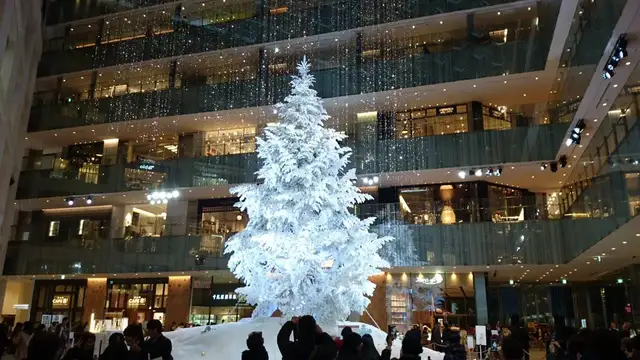
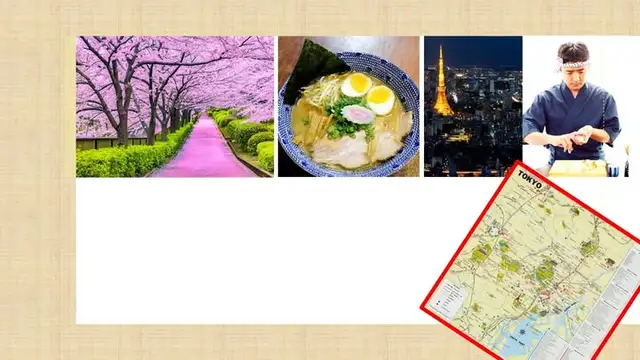
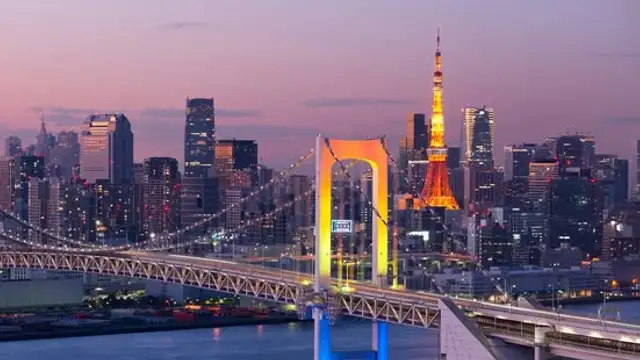
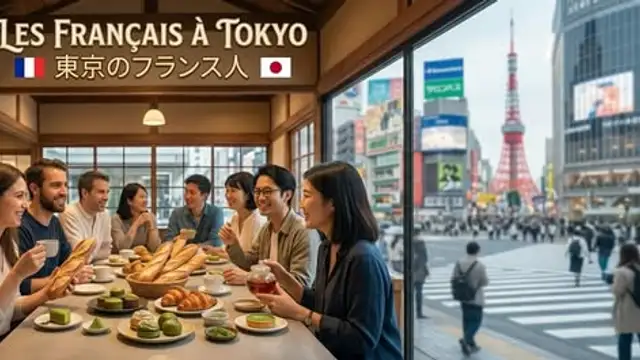
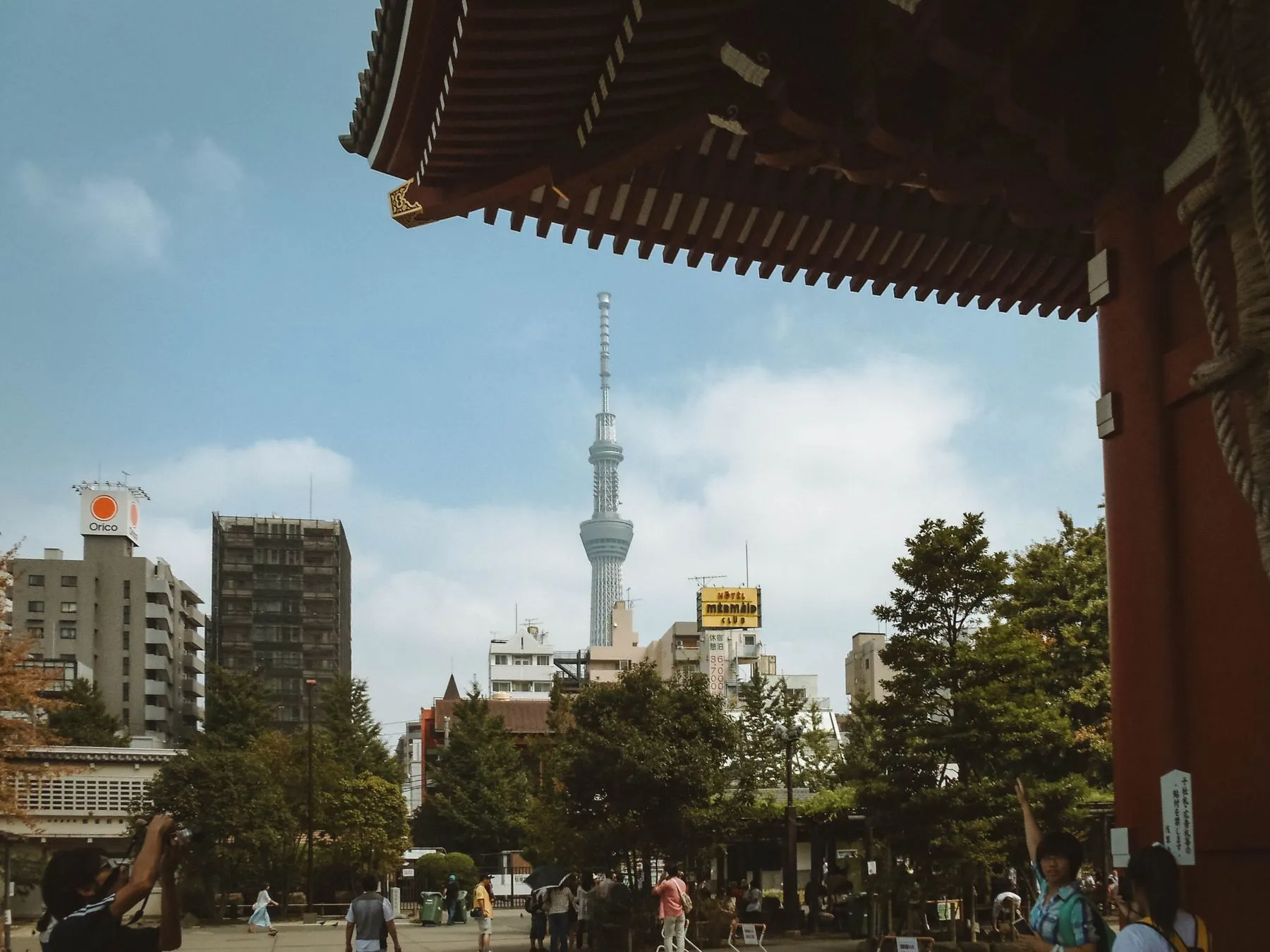
Tokyo disorients, then wins you over: a megacity of unbelievable safety and cleanliness, where children gain an autonomy unthinkable elsewhere. The French community is long-established, from Kagurazaka to the lycée in Takinogawa.
Currency
Yen (¥)
Language
Japanese
Time vs Paris
7 to 8h ahead
Emergencies
119 (ambulance), 110 (police)
FIAFE network
The Accueil for French-speaking families
In each city, a volunteer-run association from the FIAFE network welcomes, informs and helps French-speaking families settling in.
Association des Français du Japon (AFJ)
Since 1951
Founded in 1951, the AFJ is the oldest Accueil in the FIAFE network: a monthly welcome breakfast at the French embassy, year-round workshops, a weekly newsletter and a big back-to-school café with the whole francophone community.
Where to meet them
Welcome breakfast once a month at the French embassy (Minami-Azabu, Minato-ku).
The local French chamber of commerce (CCI France International network) is a real asset for work: networking, job offers and help to restart a career or start a business locally.
CCI France International
CCI France Japon (CCIFJ)
The leading European chamber in Japan, based in Tokyo, with a member directory, job offers and many networking events to help a spouse find work and the family settle in.
To follow local life in French: news, what's on, good addresses and, often, a directory of French-speaking professionals.
lepetitjournal.com Tokyo
MediaIn French
The Tokyo edition of the online daily for French expatriates: news, community, events, and the Living in Tokyo section with its practical guides to housing, work, health, education and Japanese public holidays.
The expat directory lists useful addresses for French speakers in Tokyo (Institut français médiathèque, associations, services); health professionals are still scarce there, the embassy's list remains the reference.
The magazine of the French Chamber of Commerce and Industry in Japan, the only fully bilingual French-Japanese title devoted to the Japanese economy and society: features on work, energy, human resources and the life of French companies in Japan, in digital form.
The online magazine of the Nippon Communications Foundation, based in Toranomon, Tokyo: several articles a week in French on life in Japan, education, health, the seasons, festivals and natural disasters, written from Japan and translated from Japanese.
The practical information site and forum of French speakers in Japan, run from Japan by a Frenchman settled in Tokyo since the 1980s: the news feed stopped in October 2025, but the forum and wiki remain active, with sections on arrival, Franco-Japanese families, children's education and health.
Freely readable forum, with recent threads on arriving in Japan, children's education, health, cost of living and banking; answers come from long-term residents, to be cross-checked against official sources.
Before you even land in Tokyo, Facebook groups are the best shortcut: ask your questions, find a flat, a nanny, a second-hand stroller, and often your first friends.
Very active Public In English
Tokyo Sayonara Sale☑
183,900 members · ≈ 729 posts/week
Tokyo Sayonara Sale group is dedicated to buy and sell in Japan.
{{{ Welcome To All New Members }}}
Group Rules! :-
You can post for buy, sell and even for free give away.
-Deal Locally, pick up, test item, and exchange money in person. Avoid sending money to the person. If the seller cannot meet for any reason and asks for money to be sent instead, report them to ADMIN immediately. Fraudulent activities are easy to commit when the sending of money is involved.
- Anyone selling has to state a meeting place/station or the willingness to meet and deal face to face, in all their posts. Posts that do NOT meet this guideline will be deleted without warning. We do not allow the sale of GOLD or obviously illegal items in Japan.NO Irrelevant/Off Topic/Politics posts
-Ads allowed in English or Japanese. Other language ads will be promptly removed
- Prices and pictures of the actual item are required. We do not allow auctioneering on this site or OBO (Yen Only please!)
If you feel there is something wrong with an ad or that the transaction isn't going smoothly, please contact ADMINS. You can find our details under the Members link on the sidebar. Public slander of an individual will result in YOUR ejection from the group. We check all ads reported.
.
- ANY bullying, trolling, attempting to date, witch-hunting, sexual harassment, or proposition members will not, at any time, be tolerated. We do not tolerate defamation of members. If you have an issue, please notify the admins directly or report posts which fall outside our rules.Permanent Ban for abusers/ bad language/dirty comments.
-Respect Everyone In The Group Regardless of Age!
-Permanent Ban on Groups/Pages/ids' Promotions!
-No fake Sales Posts!
-Re-posting is allowed up to 3 times ONLY!
If you have had a smooth sale, post a public thank you on their sales post. It allows others to know that the person is professional and can be trusted in dealings.
-Please Respect Everyone And ENJOY taking care of Rules & Regulations ✌
Thank You <3
#Admin
For foreigners who live in Japan
This group's purpose is for sharing information to foreigners, who are interested in Japanese lifestyle.
Also, I will share information, for foreigners, who live in Japan, on how to avoid some criminals and how to deal with visa.
< caution >
The following are prohibited,in this group.
Posting such as Youtube because there is paid advertising.
Posting anything sexual, and expressions such as slander.
Posting solicitations to this network, and business is prohibited.
Posting inappropriate remarks.
Posting inappropriate videos and photos.
Purpose of this group is pure sharing informations.
Please understand.
Members who do not observe the rules of the group will be immediately deleted.
I create this group to have a "foreigners living in Japan network".
This group purpose is to help newcomers in Japan with people who have experience of Japan and its culture.
Everybody are welcome (Japanese too of course)
Ce groupe sert à réunir tous les étrangers et plus spécialement les francophones vivant au japon afin d'organiser des soirées ou autres activités ou tout simplement élargir nos contacts .
De plus des astuces sur le japon ou encore des réponses à vos questions pourront être données par les anciens afin d'aider les nouveaux arrivants.
このグルップは日本に外国人を生んでいる。
日本人と外国人と一緒に文化とか趣味を
━━━━━━━━━━━━━━━━━━━━━━
🌏 ENGLISH
━━━━━━━━━━━━━━━━━━━━━━
Tokyo International Friends & Events【TIFE】
Tokyo's largest and most active international community.
18,000+ members · 50+ events every month · Since 2015
——————————————————————
👋 VISITING TOKYO? YOU'RE IN THE RIGHT PLACE.
Whether you're here for 3 days or 3 years, TIFE is your
home base for making real friends in Tokyo.
We run 50+ events every month — open to everyone:
tourists, expats, Japanese locals, students & travelers.
No awkwardness. No pressure. Just great people.
——————————————————————
🎉 WHAT WE DO
· Karaoke parties
· Language exchange (English, Japanese, Spanish, Chinese)
· International food nights
· Night jog around the Imperial Palace
· Yoga, kickboxing & social dance
· Monthly big gathering (50–100 people)
· Cultural workshops (kimono, bonsai & more)
· And much more every week!
——————————————————————
📅 HOW TO JOIN AN EVENT
1. Check our full event calendar → https://linktr.ee/TokyoMeetup
2. RSVP on Meetup.com (free to join)
3. Show up and make friends — it's that easy!
💡 TIP: Follow us on Instagram @tokyointernationalmeetup
and RSVP on Meetup to get ¥500 off select events!
——————————————————————
💬 DROP YOUR DATES BELOW!
Visiting Tokyo soon? Post your travel dates in the group
and our community will help match you with the best events
happening during your stay. We reply fast! 🙌
——————————————————————
🔗 FIND US EVERYWHERE
📅 Events & RSVP → https://linktr.ee/TokyoMeetup
🌐 Official website → https://tokyointernationalmeetup.com
📸 Instagram → https://www.instagram.com/tokyointernationalmeetup/
📋 Event rules → https://tokyointernationalmeetup.com/terms/
——————————————————————
⚠️ GROUP RULES
✅ Be respectful and welcoming to everyone
✅ Share events, photos, and Tokyo tips freely
✅ Solo visitors are especially welcome — come as you are!
🚫 No network marketing, religious recruitment, or spam
🚫 No harassment or behavior that makes others uncomfortable
🚫 No promoting other events without admin permission
Violations will result in immediate removal from the group.
——————————————————————
Tokyo is so much more fun with friends.
We'll help you find yours. See you at an event! 🗼
━━━━━━━━━━━━━━━━━━━━━━
🇯🇵 日本語
━━━━━━━━━━━━━━━━━━━━━━
東京国際交流会【TIFE】
東京最大・最もアクティブな国際コミュニティ。
会員数18,000人以上 · 毎月50以上のイベント開催中!
——————————————————————
👋 東京に来たばかりの方も、長く住んでいる方も大歓迎!
TIFEは、外国人・日本人・旅行者が一緒に楽しみながら
本物の友達を作れるコミュニティです。
言語も国籍も関係なし。一人参加も大歓迎です!
——————————————————————
🎉 こんなイベントをやっています
· カラオケパーティー
· ランゲージエクスチェンジ(英語・日本語・スペイン語・中国語)
· 国際料理ナイト
· 皇居ランニング
· ヨガ・キックボクシング・ソーシャルダンス
· マンスリー大交流会(50〜100名規模)
· 文化体験(着物・盆栽など)
· その他、毎週さまざまなイベントを開催中!
——————————————————————
📅 イベントへの参加方法
1. イベントカレンダーを確認 → https://linktr.ee/TokyoMeetup
2. Meetup.comで参加登録(無料)
3. 当日参加するだけ!一人でも安心です
💡 ヒント:Instagramをフォローhttps://www.instagram.com/tokyointernationalmeetup/
TEN is Japan's original community for foreigners living in Japan. TEN has decided to move to a new platform that is more robust with more to offer to our...
Francais au Japon (Working holiday, PVT, résidents...)
36,100 members · ≈ 58 posts/week
Bienvenue! Groupe d'entraide et de conseils pour les personnes au Japon ou qui souhaitent s'y rendre. Nous attendons respect dans les échanges entre les membres. Aussi liens promotionnels et vers d'autres groupes ne sont pas autorises et seront retires du groupe, sauf accord des admins.
[About those questions for entering...]
We encourage all prospective members to answer the questions. It helps us know you have a trip, live or work in, or will visit Tokyo and that you aren't going to spam, etc. However, if your profile, groups joined, or recent public post(s) / comment(s) list(s) that you live in or will soon be traveling to the greater area, we will likely let you in.
[General description]
This group is open for people who are living/working/studying in Tokyo (and NOT Osaka, Kyoto, Nagoya, Tsukuba, Oita, or Kyushu -- which all have their own groups already and we encourage you join those), who would like to network with each other. In such a big city as Tokyo, it seems equally easy and hard to make new friends, but it is something that should be attempted.
Exception: Anyone from the above "NOT" areas who answers the questions and says they are visiting.
Also, moving to a new area with the size of Tokyo is scary! Lots of unknowns, right? Feel free to ask them here!
What to post (a variety, but Some Things are Prohibited): Rules 1-4 (core rules), 11-13 (comparatively minor notes)
What can happen in conflict: Rules 5-10
Future Readiness: Rule 14
[Chiba, Yokohama, and Military Atsugi / Yokosuka]
I don't really see any "Foreigners in ~~" groups in those locations, so you are welcome to join this group as people of the greater-Tokyo area.
[Links to Groups for Other Cities]
Osaka: https://www.facebook.com/groups/inosaka
Kyoto: https://www.facebook.com/groups/KyotoExpatsInternationals
Nagoya: https://www.facebook.com/groups/550924268348039
Tsukuba: https://www.facebook.com/groups/tsukubaadvice
Kyushu: https://www.facebook.com/groups/668065659991188/
Oita:
https://www.facebook.com/groups/2578890203/
Camp Zama: https://www.facebook.com/groups/43328722524
[Rules]
1. Any post of a commercial (as in opposite of non-commercial, meetup), personal sales, and love adverts, job adverts, real estate ads, will not be allowed in this group. N.P.Os are an exception . These posts are deleted and you will most likely be kicked or banned. There are plenty of other groups made for this exact purpose. Post there.
2. Most events, questions, recommendation posts, and members living spaces, private share house advertisements are heavily encouraged! We encourage most blogs and stories. Please contribute to such healthy (and ad-free) discussion!
3. ALL Commercial posts (anything which makes money) club or dance party events must receive permission from an admin first, and limited to once every 2 weeks (per advertised thing), and two times per person per four, weeks. Selling items is prohibited and your post will disappear, likely, you will also be kicked or banned.
4. All other personal advertisements shall be limited to once every seven days, and comment-bumping by the original poster is allowed every 40 hours or once in the period starting 10 hours before an event begins. Of course, posts may still disappear for any other reasons.
Un rassemblement de français prêts à s'entraider pour réussir leurs vies, leurs séjours à Tokyo...
Intéressé ?
Sont concernés : TOUS CEUX QUI ONT EU UNE EXPÉRIENCE A TOKYO ou QUI VONT ÊTRE AMENES A NOUS REJOINDRE DANS CETTE RICHISSIME CITY !
A vous de jouer !! faites passer le mot EN INVITANT VOS AMIS AU GROUPE !
Une fois tous réunis, un projet prendra forme afin de faciliter la vie de tous les Français / Tokyoites.
Votre admin,
Philippe Remy
Ce groupe a été créé pour les Français(Francophone) et les Japonais intéressés par les échanges linguistiques. Le principal objectif étant de connecter les personnes entre elles et de les aider à résoudre leurs difficultés.
Si vous parlez français, anglais ou japonais et que vous voulez étudier d'autres langues, ou avez simplement besoin d'aide, rejoignez nous!
Il y a trois conditions qui doivent être remplies pour rejoindre le groupe:
1. Vous devez connaitre au moins l'une des langues
2. Aidez les autres au possible
3. Soyez poli et amical
Rejoignez nous, rencontrez des personnes intéressantes et étudiez les langues avec plaisir!
This group was created for French(Francophone) and Japanese who are interested in language exchange. The main aim is to connect the people and help them with language difficulties.
If you speak French, English or Japanese and want to study other languages, or you just need help, join us!
There are 3 conditons, which must be fulfilled to join the group:
1. You should know at least one of these languages
2. You should help other people if possible
3. You should be polite and friendly
Join us, meet interesting people and study languages with pleasure!
このグループは、言語交換に興味がある日本人とフランス人(フランス語圏も含む)にために作られました。私たちが目標としているのは、人々を一つにし、言語学習の困難さをみんなで助け合っていくというものです。
もし、フランス語、英語、日本語を話す事ができる、他の言語を勉強したい、あるいはただ言語学習をサポートしたい、そういう人は
ぜひこのコミュニティに入ってください。
コミュニティに入ってください、そうすればきっと楽しい人と出会い、言語学習も楽しくなります
Vous débarquez à Tokyo et cherchez un logement, des colocs, ou voulez être au courant des bons plans, soirées, concerts, expos sympas... Ce groupe vous est dédié !
Il sert de plateforme de petites annonces pour :
- Recherche d'appart
- Recherche de coloc
- Location de chambre
- Recherche de job/stage
- Cours de japonais
- Achat de meubles
- Présentation de soirées
- Actus entre français
- Rencontres
Vous êtes français et vous habitez à Tokyo? Ou peut-être débarquez-vous en terre inconnue? Ce groupe a été créé pour vous aider/renseigner !
Trouver un...
Compiled from Facebook's public search, links checked in July 2026. Group sizes change all the time.
AEFE network
Accredited French schools
Schools accredited by the French Ministry of Education follow the French curriculum: your child can continue their schooling seamlessly, abroad and back in France.
Source: official AEFE directory, verified June 2026. aefe.gouv.fr
Tutoring and private lessons
To support your children's schooling across two systems, two solutions designed for expat families.
Axiom Academic
Private lessons and tutoring for expat families: French curriculum, IB and British curriculum, at home or online, with teachers who know the schools in your city.
The Lycée français international de Tokyo gathers the whole French curriculum on its Takinogawa campus, nursery to baccalaureate. Around it, Japanese public school is a real immersion option for younger children.
Good to know
LFI Tokyo (AEFE-affiliated) teaches about 1,550 pupils: apply ahead, from France if possible.
Japanese public school is free, demanding and highly structured: immersion works well in early years.
Mind the local calendar: the Japanese school year starts in April (the LFI follows the French rhythm).
English-language international schools abound but are pricey; Japanese stays secondary there.
French-speaking community
Kagurazaka, the historic French quarter around the Institut français, remains the beating heart of the community: bakeries, bookshops and francophone cafés. The AFJ has federated it all since 1951.
Good to know
The AFJ (FIAFE network) has welcomed newcomers for over 70 years.
Kagurazaka and the Institut français du Japon concentrate francophone cultural life.
Families often settle around Hiroo, Minami-Azabu, Kagurazaka or near the lycée in Kita-ku.
The Français du monde solidarity bookshop recycles French-language books.
A place has closed, something has changed?
The arrival reflex
The apps to download when you land
Drop your bags, download these and you're set: the apps everyone in Tokyo uses to get around, get things delivered and organise daily life.
Getting around
Suica
Tokyo's transit card gone digital: add it to Apple Wallet, top up from the app, and tap to pay at the konbini too.
The journey planner all of Tokyo swears by: to-the-second timetables, right platform, right car; Japanese only, so keep Google Maps as a backup at first.
What mums ask when they arrive in Tokyo, in short, sourced answers.
French, Japanese or international school: where do we start?
The Lycée français international de Tokyo, in Takinogawa, takes children from nursery to the final year and follows the French calendar; it is the city's only AEFE-accredited school, so the only one eligible for the consulate's school grants. Japanese state school is free, starts on 1 April and works very well as immersion for little ones; English-language international schools are plentiful and expensive. Our Schools and School fees pages cover it all: /en/cities/tokyo/school-fees/.
Source ↗Do we need health insurance for the children?
Yes, and it is compulsory: anyone staying in Japan for more than three months must be covered by a parent's employee insurance or by the ward office's National Health Insurance. It covers 70% of care, and Tokyo's wards pay the rest for children up to 18 through a medical certificate to request at the ward office on arrival. It is all explained on our Health page: /en/cities/tokyo/health/.
Source ↗How do I find a paediatrician, ideally French-speaking?
Paediatrics is a neighbourhood specialty in Japan: there is a practice (shonika) a few streets from home, without appointment or prior registration. For French, the embassy publishes a list of French-speaking doctors, dentists and therapists, where GPs and psychologists speak French but the paediatrician speaks English; we reproduce it on our Health page: /en/cities/tokyo/health/. The Tokyo Metropolitan Government's Himawari service points to English-speaking practices.
Source ↗Which number do I call if my child is ill at night?
119 for a life-threatening emergency: the ambulance is free and an interpreter can be put on the line. If you hesitate, #7119 (Tokyo Fire Department consultation centre, 24/7, in Japanese) tells you whether to head to hospital, and #8000 puts you through to a paediatric nurse Monday to Friday from 18:00 to 8:00 and all day on weekends and public holidays. The children's hospitals in Setagaya, Fuchu and Shibaura have paediatric emergency departments open day and night.
Source ↗Which neighbourhood should we settle in with children?
French families cluster around three hubs: Hiroo and Minami-Azabu near the embassy, quiet and green but expensive; Kagurazaka and Iidabashi around the Institut français; and Takinogawa, in the north, where children walk to the Lycée. Setagaya and Nerima, to the west, offer more space for the same budget. Our Settling in page reviews the neighbourhoods: /en/cities/tokyo/settling-in/.
In order: register your address at the ward office within 14 days, with the residence card received at the airport, and at the same counter enrol in health insurance, the child allowance and the children's medical certificate; apply for the My Number card; open a bank account and a phone line; then register with the French consular register, online, free and valid 5 years. Details on /en/cities/tokyo/settling-in/.
Source ↗Do my children pay for the subway and trains?
Before elementary school, they travel free with a fare-paying adult; from 6 to 11, the child fare is half the adult fare, applied automatically by a child Suica or PASMO card. A 12-year-old still in elementary school keeps the half fare, and secondary pupils pay full fare, with a student pass for the Lycée commute.
Source ↗Nursery, nanny, au pair: how do you get a little one looked after?
Japanese nurseries (hoikuen) take children of working parents, from birth to school entry, for about eight hours a day; you apply at the ward office, fees depend on income and care for 3 to 5-year-olds is free, in nurseries as in kindergartens (yochien). Public places are scarce in the centre: international nurseries and the Franco-Japanese EIFJ nursery complete the offer, and English-speaking babysitting agencies or an au pair help out in the evenings.
Source ↗My child does not speak Japanese: how will they cope?
At the Lycée français the question does not arise, and Japanese is learnt in class and in the street. At Japanese state school, little ones adapt within months, carried by very attentive teachers and curious classmates; it is at secondary level that the immersion gets tougher. To keep French going outside the Lycée, the AFFJJ runs FLAM workshops, La Petite École Solidaire gives lessons and the Institut français welcomes children and teens: our addresses are on /en/cities/tokyo/family-outings/.
Source ↗Is Tokyo really that expensive for a family?
Less than you think. Two items weigh: central housing, with four to six months' rent to pay upfront, and international schools. On the other side, children's care is free up to 18, so is little ones' transport, care for 3 to 5-year-olds is free, neighbourhood restaurants are affordable and parks and temples cost nothing; only fruit, cheese and wine push up the trolley. Our Settling in page details the budget: /en/cities/tokyo/settling-in/.
Source ↗Where can I meet other French-speaking mums?
The AFJ holds a welcome breakfast every month at the French embassy and organises workshops, outings and a back-to-school café in September; Ippo Ippo gathers parents of 0 to 3-year-olds, the Lycée parents' association and the Facebook groups of French-speaking mums do the rest. Wednesdays at the Institut français médiathèque and the school gates in Takinogawa are the best places to strike up a conversation.
You declare the pregnancy at the ward office, which gives you the mother and child health handbook and vouchers for prenatal check-ups, then you book your maternity unit yourself, very early as places go fast. Childbirth is not reimbursed like treatment: insurance pays a lump-sum allowance of 500,000 yen, settled directly with the hospital. Epidurals remain rare, except in a few maternity units such as Aiiku Hospital; our addresses are on /en/cities/tokyo/health/.
The MumExpat assistantSchools, health, paperwork, outings, city by city
The assistant answers from the site's content and cites its pages; it can be wrong, check the page it cites. It replaces neither a doctor nor the consulate.
Hello. Tell me your city and your question: I answer with the guide's verified landmarks and point you to the page to read.
Your privacy matters
Today MumExpat only uses essential cookies (anti-spam and security). If you accept, we may also enable audience measurement to improve the site. Learn more


 City guide